Carved into the soft volcanic rock of Frijoles Canyon, the Bandelier cliff dwellings are among the most striking examples of Ancestral Pueblo architecture left in the Southwest. This isn’t a reconstruction or a museum diorama. These are the real, weathered rooms where families lived roughly 800 years ago, and you can still climb into some of them today. Here’s the story behind the dwellings themselves, the people who built them, and what to look for when you visit.
Who Built the Bandelier Cliff Dwellings?
Bandelier National Monument, in the Jemez Mountains about an hour from Santa Fe, protects part of the ancestral and traditional lands of at least 23 tribal nations. Ancestral Pueblo communities lived and farmed in Frijoles Canyon from around 1150 to 1550 CE, and the people of Cochiti Pueblo are generally considered the most direct descendants of the community that built the Bandelier cliff dwellings here.
Frijoles Canyon and the surrounding mesas provided water, arable land, and volcanic soils that Ancestral Pueblo farmers used with remarkable ingenuity. Farming in this high-desert environment was never simple, but generations of people developed ways to grow crops and sustain communities across this landscape.
Inside the Cavates: How Ancestral Pueblo Families Lived in the Cliffs
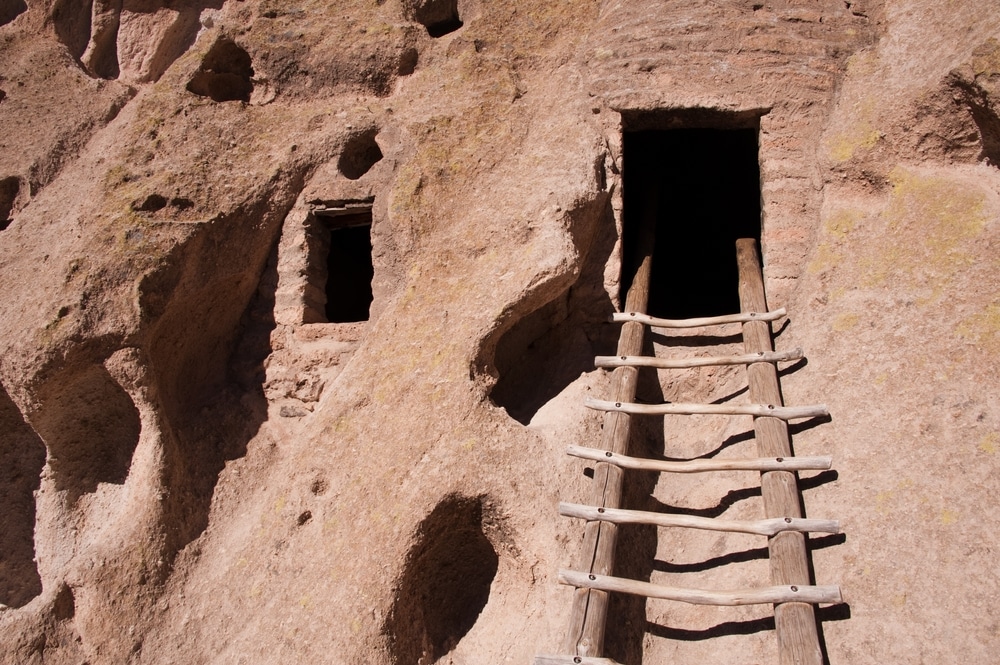
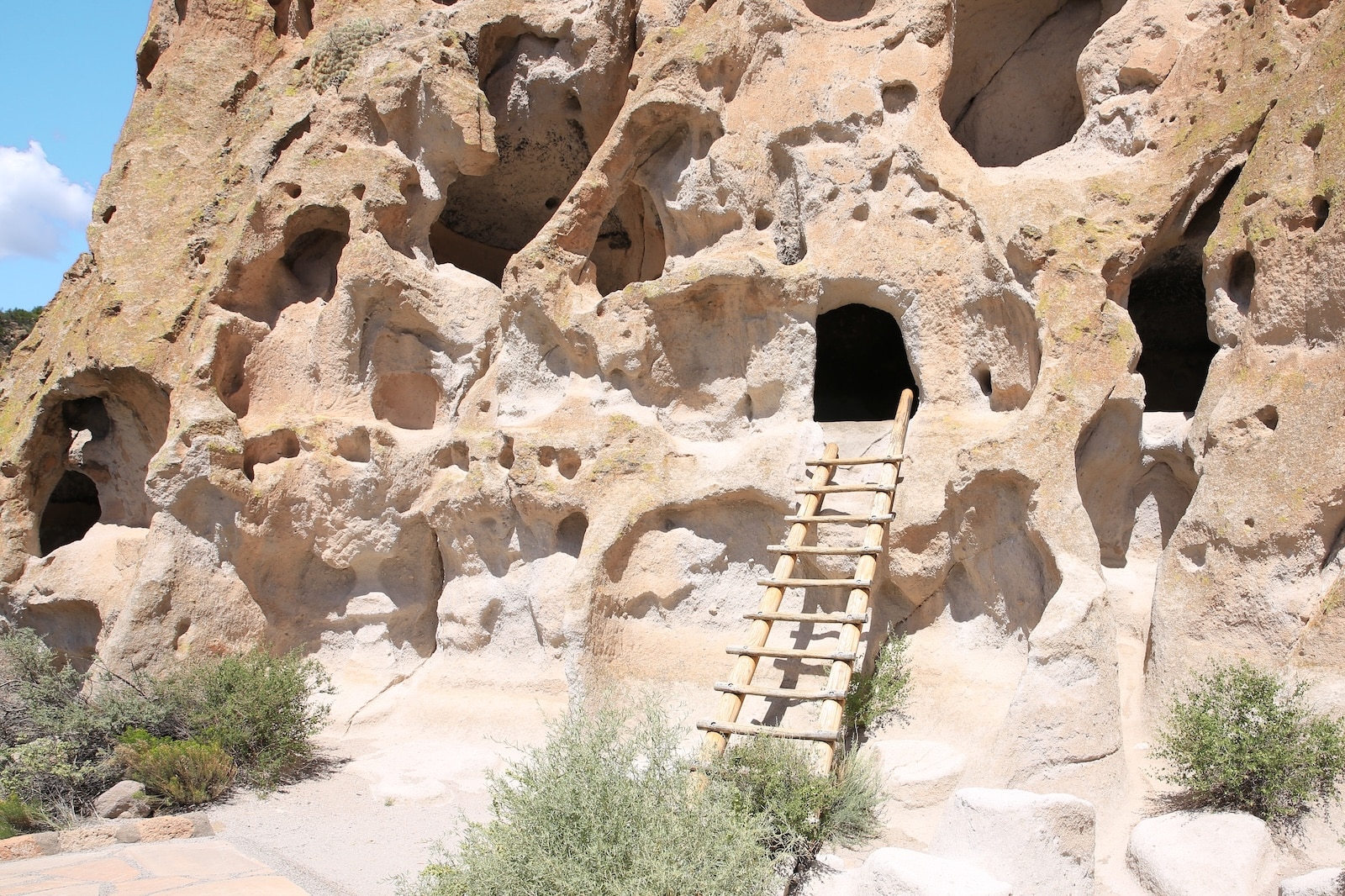
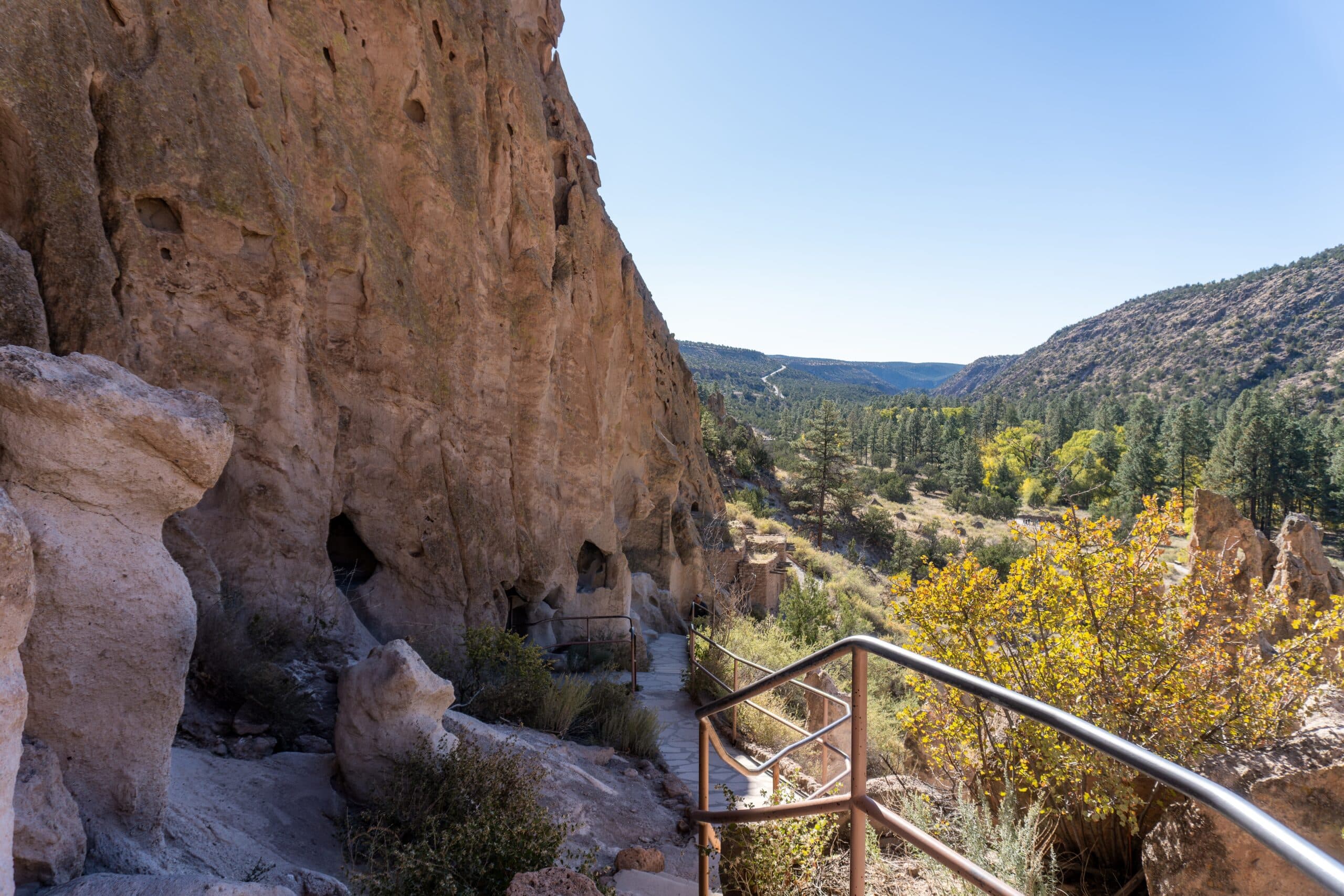
The small rooms carved directly into the canyon walls are called cavates, and they’re the feature most people picture when they think of the Bandelier cliff dwellings. Families enlarged natural openings in the soft volcanic tuff with hand tools, then often built additional freestanding masonry rooms directly in front of the cliff face.
Many cavate ceilings remain darkened from smoke, a technique that helped stabilize the soft volcanic tuff. You can also see holes in the cliff face where wooden roof beams once held up structures built against the canyon walls.
Along the Pueblo Loop Trail, several cavates have modern wooden ladders that let visitors climb inside and see the spaces firsthand. It’s a strange, quiet feeling to stand inside a room someone called home eight centuries ago, low ceiling and all.
Climbing to Alcove House
The most dramatic single stop in the canyon is Alcove House, a natural alcove tucked 140 feet above the floor of Frijoles Canyon. Reaching it requires an additional one-mile round-trip walk from the Pueblo Loop Trail, followed by a climb up four wooden ladders and a series of stone stairs.
Archaeologists believe approximately 25 Ancestral Pueblo people once lived here. Alcove House included homes, a kiva, and other structures, and the kiva visitors see today is partly original and partly reconstructed.
The climb isn’t suitable for everyone, particularly visitors with a fear of heights or mobility limitations, but it offers a rare opportunity to see one of Bandelier’s elevated habitation sites up close. Winter weather can also make the ladders and stairs icy enough to temporarily close the site, so check current conditions before planning the climb.
Petroglyphs and What They Tell Us
Scattered throughout Frijoles Canyon, petroglyphs and pictographs are among the many cultural resources preserved at Bandelier. Some depict geometric forms, animals, human figures, and other imagery carved or painted onto the rock.
For Pueblo communities whose ancestors lived here, the canyon remains an important cultural and spiritual landscape, not simply an archaeological site. The markings, dwellings, agricultural areas, and other remains preserved throughout Bandelier are all part of a much larger history that continues beyond the period represented by the ruins.
Photographing the Bandelier Cliff Dwellings
The volcanic tuff at Bandelier changes noticeably with the light, shifting from pale tan to warmer gold and orange tones as the sun moves across the canyon. Earlier and later in the day generally offer softer light and more texture than the harshest midday sun, while overcast conditions can make it easier to photograph the interiors of cavates without extreme contrast between bright exteriors and darker rooms.
Many of the cavates were constructed in south- or southeast-facing cliffs, where sunlight could reach them during winter. That orientation is another small detail worth noticing as you walk through the canyon.
However you plan your visit, leave yourself more time than you think you’ll need. The Bandelier cliff dwellings reward slow looking, especially if you want to notice the beam holes, masonry remains, petroglyphs, and differences between the carved rooms.
Planning the Practical Details
Bandelier’s principal cliff dwellings sit along the 1.4-mile Pueblo Loop Trail, an easy walk from the visitor center that generally takes about 45 minutes to an hour, plus extra time to explore the archaeological sites. Wooden ladders along the route allow visitors to enter several cavates.
Alcove House requires an additional one-mile round-trip side trip from the Pueblo Loop Trail and includes four ladders and numerous stone stairs.
Because Bandelier may operate seasonal shuttle service and parking procedures can change during busy periods, we’d recommend checking the National Park Service’s official Bandelier page for current hours, shuttle information, closures, and trail conditions before you go.
Make It a Day Trip From Santa Fe
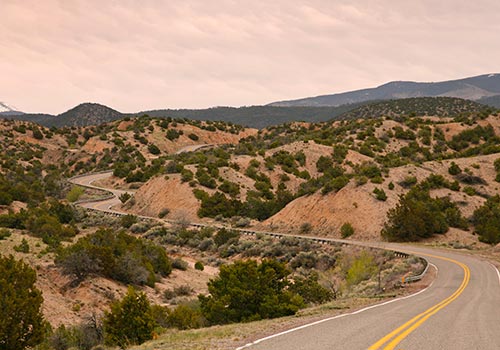
Bandelier is an easy day trip from Santa Fe, generally about an hour’s drive. Los Alamos is a natural additional stop if you want to extend the day, or you can return to Santa Fe after exploring Frijoles Canyon and spend the rest of the afternoon downtown.
If you’re building out a longer northern New Mexico itinerary, Ghost Ranch makes a great companion destination for a separate day in the opposite direction. Our guide to scenic drives near Santa Fe also covers several other routes worth considering during a longer stay.
However you spend your day, El Farolito Bed and Breakfast makes an easy home base for exploring Bandelier and the rest of northern New Mexico. We’re located within walking distance of Santa Fe’s historic Plaza, so you can return from a day in Frijoles Canyon and still head out on foot for galleries, shops, restaurants, and other downtown attractions.
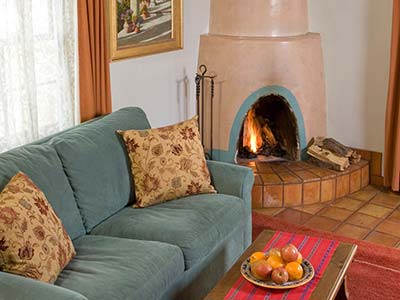
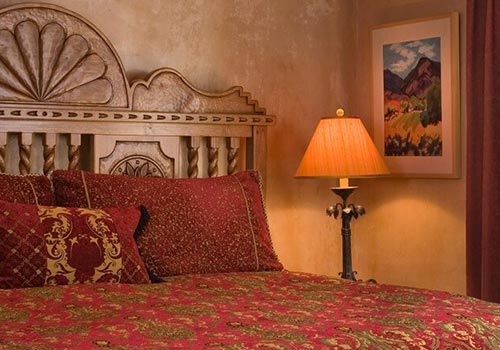
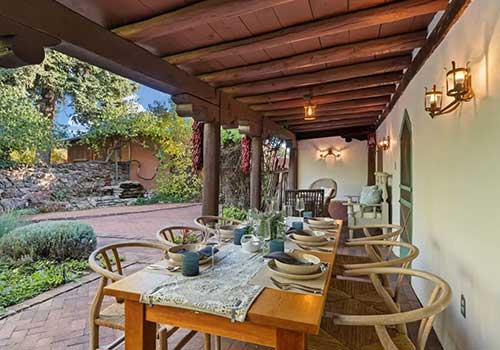
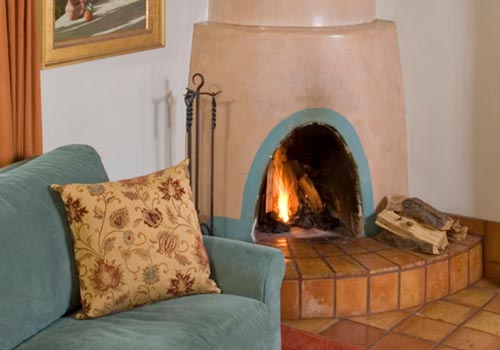
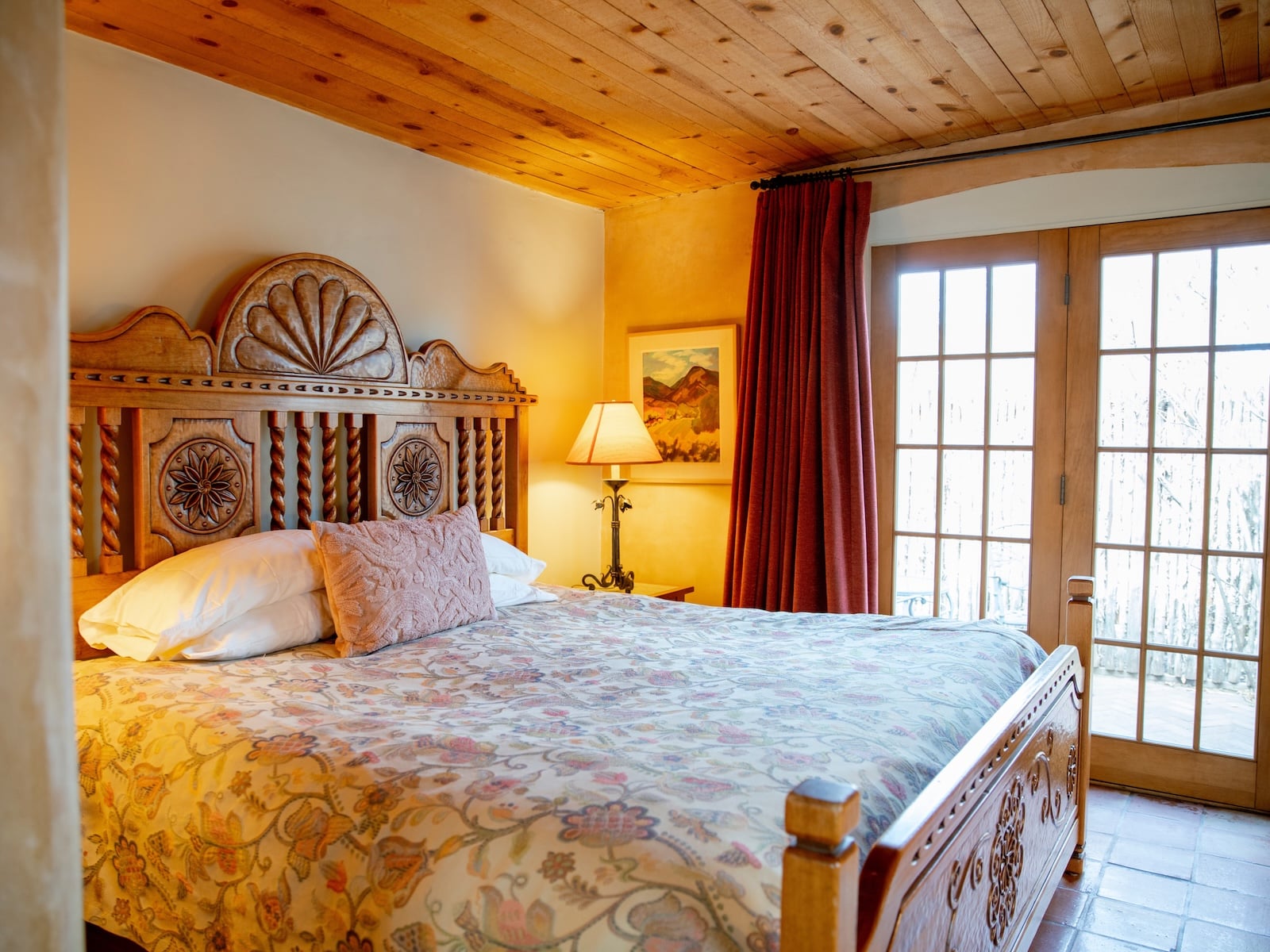
Our Bed and Breakfast has eight individually decorated guest rooms and casitas, with private baths, fireplaces, comfortable sitting areas, and patios that range from shared garden spaces to private courtyards. The rooms incorporate Native American, Spanish Colonial, Mexican, and regional art, along with locally crafted furnishings and traditional adobe architecture. You’ll also have practical comforts such as Wi-Fi, in-room coffee service, refrigerators, climate control, and complimentary on-site parking.
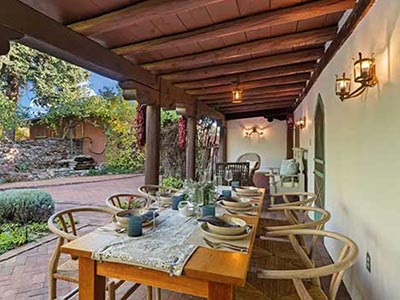
In the morning, breakfast is already taken care of before you make the drive to Bandelier. Our homemade, buffet-style breakfast includes a hot entrée, plus fresh fruit, cereals, yogurt, juices, coffee, tea, and home-baked goods. If the weather cooperates, the adjacent patio is a pleasant place to start the day before heading into the mountains.
After hiking among the Bandelier cliff dwellings and climbing into cavates that have stood for centuries, coming back to a comfortable room in downtown Santa Fe makes for a very good end to the day. Book your room at El Farolito and use the inn as your base for exploring Bandelier, Santa Fe, and northern New Mexico.